
So You Want to Make Jewelry… Part 2
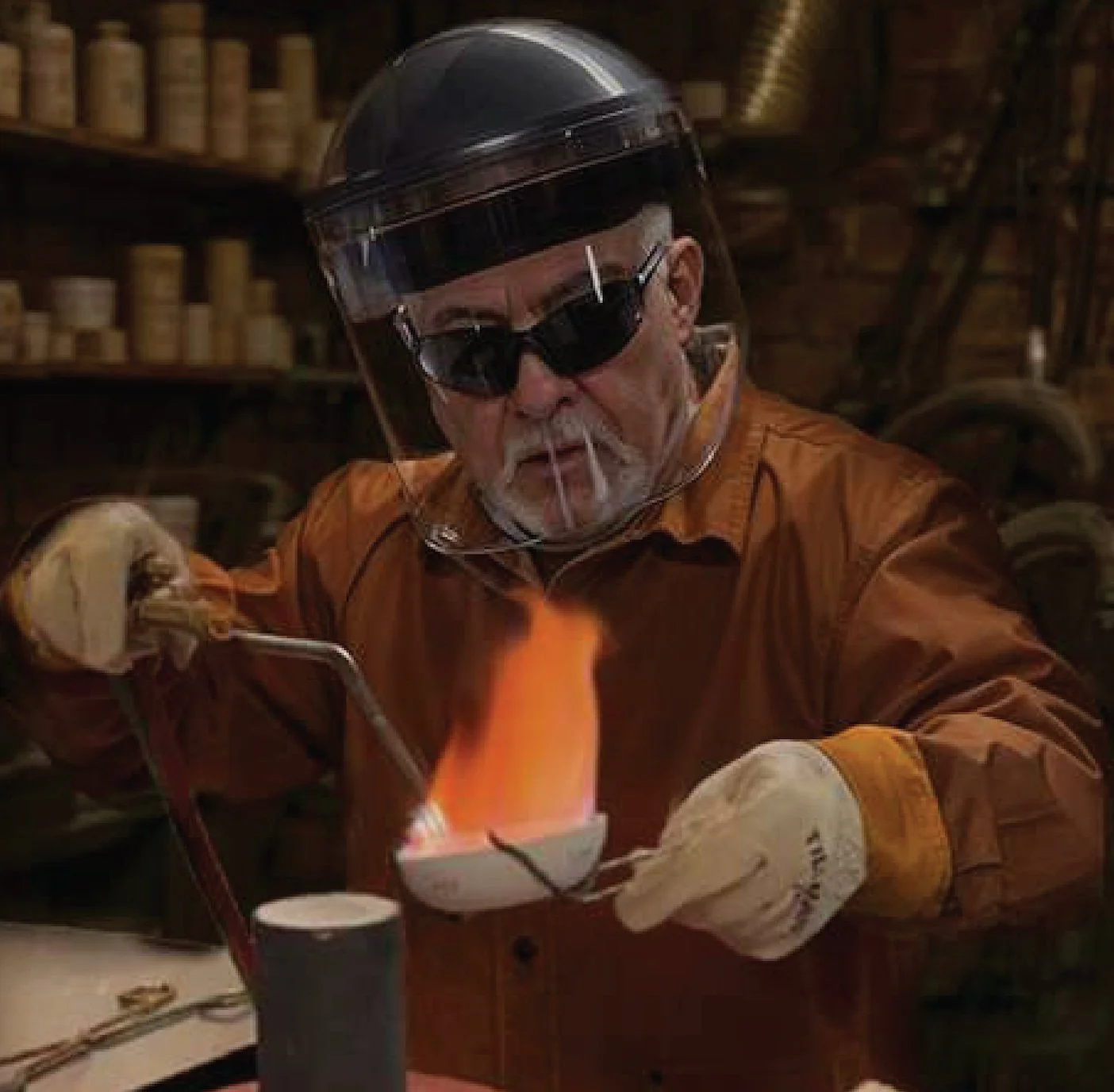
In the first blog (So You Want to Make Jewelry… Part 1), I answered the question that beginners often ask first: “What tools do I need?” Unfortunately, the next question beginning jewelry makers ask me is not about the topic of this post – but it should be (They usually ask about the materials, like what type and in what shape or form, but don’t worry, we’ll get to that in another post.).
The first thing I tell new students in a jewelry class, right after I introduce myself, is that I am a safety instructor first and a jewelry teacher second. There are many safety issues to keep in mind while working in a metal arts shop. When I ask beginning and self-taught jewelry makers what safety measures they use in their shop, the list is usually short: safety glasses, gloves, shop apron, and a dust mask – maybe. All of these are good, and part of the list of items I use, but there are several others that all too often get overlooked. Keeping yourself safe while working in any workshop environment is a big subject, and too large for the scope of this post, but I want to share a few key ideas, and heighten your awareness of its importance as you explore this craft.
If we are being honest, most of us think of the here and now and the obvious when it comes to safety in any workshop. For example, metal and tools can be sharp, or hot – or both, and therefore can cause a cut or a burn. This is true, but there is another way to think about safety. There is the risk of immediate harm or injury, but there is also harm or injury that is cumulative and happens over a long period of time such as repetitive stress or auditory injury. It’s important to plan your work flow and your work space so that both immediate and long-term injuries can be minimized, or eliminated – if possible. Here are a few examples.
Never do metal art work where you eat or prepare food, and don’t eat or drink from open containers (like cups, glasses, plates or bowls) in the workshop.
Safety glasses are a must, but for some processes using safety glasses with at least grade 3 shading protects your vision from ultraviolet (UV) and infrared (IR) light which can damage vision over time.
Several metal art processes produce harmful levels of noise (e.g. forging); use ear plugs or ear muffs.
Closed-toe leather shoes and cotton clothing are the best protection from hot or sharp pieces of metal.
Because there are many things to consider when setting up and working in a shop, what can a jewelry maker do to stay safe and avoid injuries – especially finding and avoiding the not-so-obvious safety hazards? One way is to do a 5 senses+ safety audit. This audit asks two questions:
What activities in the shop are hazardous to one or more of my senses and what can I do to protect myself?
What common sense things can be done to proactively prevent injuries?
Once these two questions are answered and protective measures are implemented in the shop, you are ready to explore this craft.
If you would like to learn more about this topic, my book, Jewelry Casting in the Small Shop: Learning and Teaching the Lost Wax Casting Process has an entire chapter about shop safety as well as a 5 Senses+ Safety Audit Form and other useful information.
Stay safe and have fun!